1st prize – J. Vītols Rūķīši un meža vecis (The Dwarves and the Old Man of the Forest);
2nd prize – A. Kalniņš Senatne (Antiquity), J. Mediņš Jāņu nakts (Midsummer Night), A. Kalniņš Rāmavas ozols (The Rāmava Oak);
1st prize – A. Kalniņš Darbs un dziesma (Work and Song);
2nd prize – H. Ore Lauztās priedes (Broken Pines);
1st prize – J. Vītols Mīlas dēļ (For the Sake of Love).
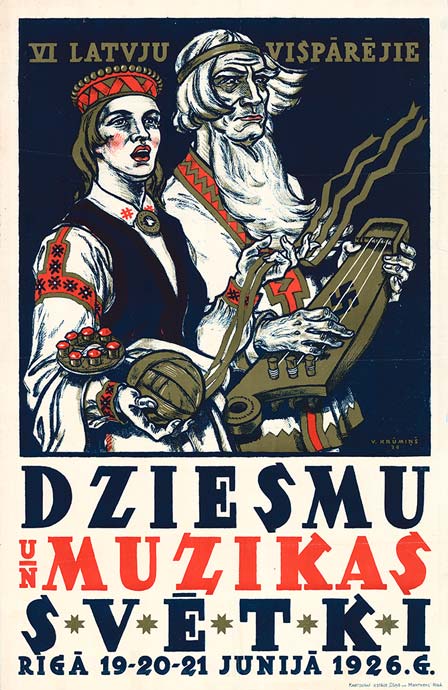
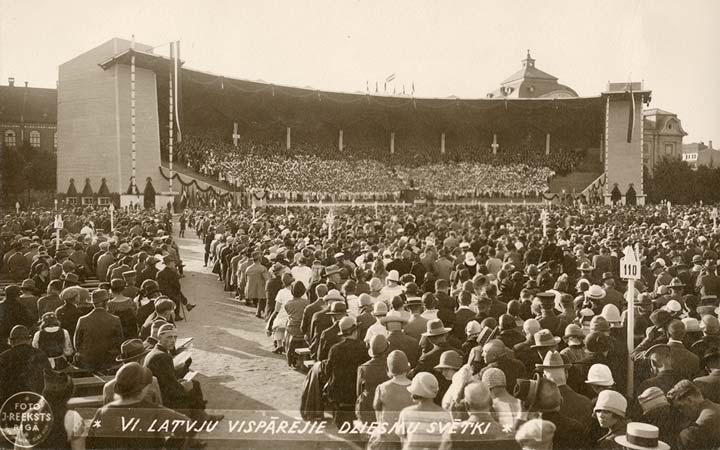
The Gallery displays the photographs related to a particular Celebration or festival. Here you will also find photographs of festival souvenirs and items, such as chief conductors’ and chief choreographers’ pins, conductors’ batons, prizes and trophies of choir competition winners, and the commemorative coins, badges, bookmarks, pennants, decorative plates specially produced for each event, as well as entrance tickets, passes and posters.
![VI latvju vispārējie Dziesmu un mūzikas svētki Rīgā 19-20-21 junijā 1926.g. [attēls]](https://dziesmusvetki.lndb.lv/wp-content/themes/dziesmusvetki/images/loading.gif)
From the very beginning of the Celebration, chief choir conductors have been particularly honoured, and since 1948, when the first grand dance performance was included in the Celebration programme, chief choreographers have been similarly honoured. The Honorary (Goda) title is bestowed on long-standing, highly respected chief conductors and chief choreographers. The Personalities section contains extended biographical profiles, photographs, video interviews and other materials relating to the respective event’s honorary chief conductors and chief choreographers.
Ernests Vīgners
Chief conductor
1850–1933
Conductor, composer, folklore collector
Notable choir and orchestra conductor, composer and folklore collector. The first Latvian musician to receive professional education at the Moscow Conservatory, as well as one of the pioneers of Latvian professional music.
Pāvuls Jurjāns
Chief conductor
The choice of repertoire has always been a particularly important issue at Celebrations – how many much-loved and familiar classics to include in the programme, how many new works to be given the opportunity? Should we perform only our national repertoire, or should we also include foreign repertoire? Programmes ought to consider the wishes and potential of both participants and organisers, but there are also the obligatory duties once demanded by the prevailing regime. In this section you can find digitised Celebration programmes with event and concert repertoires, as well as lists of the repertoire for the massed and combined choirs and grand dance performance repertoires.
|
Song title
|
Composer / Finisher
|
Text
|
|---|---|---|
| Mūsu Tēvs debesīs | Emilis Melngailis (1874-1954) | Mateja evanģ. 6: 9-14 (Emīļa Melngaiļa latviskojums) |
| Ej, saulīte, drīz pie Dieva! | Pāvuls Jurjāns (1866-1948) | Tautasdziesma |
| Motette/ Cik mīlīgas | Oskars Šepskis (1850-1915) | Sv.rakstu vārdi |
| Līgo dziesmas - II virkne | Pāvuls Jurjāns (1866-1948) | Tautasdziesma |
| Līgo dziesmas - sešu melodiju virkne | Vīgneru Ernests (1850-1933) | Tautasdziesma |
| Aiz upītes es uzaugu | Jurjānu Andrejs (1856-1922) | Tautasdziesma |
| Dieva gods/ Tā debess slavē | Tā debess izteic | Ludvigs van Bēthovens |
| Pūtin pūta | Jānis Cimze (1814-1881) | Tautasdziesma |
| Līksmošana | Alfrēds Kalniņš (1879-1951) | Jānis Jaunsudrabiņš |
| Dievs, svētī Latviju! | Baumaņu Kārlis (1835-1905) | Baumaņu Kārlis |
| Ak, Jeruzaleme, mosties! | Jurjānu Andrejs (1856-1922) | Korālis |
| Iz 137. Davida dziesmas | Alfrēds Kalniņš (1879-1951) | Sv.rakstu vārdi |
| Gaismas pils | Jāzeps Vītols (1863-1948) | Auseklis |
| Birztaliņa | Jānis Zālītis (1884-1943) | Kārlis Jekabsons |
| Senatne | Emīls Dārziņš (1875-1910) | Rainis |
| Daba i [un] dvēsele | Emilis Melngailis (1874-1954) | Rainis |
| Rožu dārzs | Emilis Melngailis (1874-1954) | Tautasdziesma |
| Bārenītes slavināšana | Emilis Melngailis (1874-1954) | Tautasdziesma |
| Mūžam zili | Emīls Dārziņš (1875-1910) | Kārlis Skalbe |
| Vīrs, kam vara | Emilis Melngailis (1874-1954) | Tautasdziesma |
| Bij' man vienas rozes dēļ | Emilis Melngailis (1874-1954) | Tautasdziesma |
| Latvju himna | Alfrēds Kalniņš (1879-1951) | Vilis Plūdonis |
| Brīvība | Alfrēds Kalniņš (1879-1951) | Auseklis |
| Beverīnas dziedonis | Jāzeps Vītols (1863-1948) | Auseklis |
| Biķeris miroņu salā | Jānis Zālītis (1884-1943) | Jānis Poruks |
| Sapņu tālumā | Emīls Dārziņš (1875-1910) | Aspazija |
| Dzimtenē | Alfrēds Kalniņš (1879-1951) | Anna Brigadere |
| Romavas ozols | Alfrēds Kalniņš (1879-1951) | Matīss Siliņš |
| Karogs | Jāzeps Vītols (1863-1948) | Edvards Virza |
| Pūt, vējiņi | Jurjānu Andrejs (1856-1922) | Tautasdziesma |
| Rindām auga ozoliņi | Jurjānu Andrejs (1856-1922) | Tautasdziesma |
| Kas tie tādi sijātāji | Jānis Cimze (1814-1881) | Tautasdziesma |
| Ai, zaļāja līdaciņa | Pāvuls Jurjāns (1866-1948) | Tautasdziesma |
| Papardes zieds | Valdemārs Ozoliņš (1896-1973) | Kārlis Krūza |
| Trīs jaunas māsas | Jāzeps Vītols (1863-1948) | Tautasdziesma |
| Tas bij' vīris | Pāvuls Jurjāns (1866-1948) | Tautasdziesma |
| Dzērājpuisis bēdājāsi | Emilis Melngailis (1874-1954) | dainu vārdi |
| Man māmiņa piesacīja | Emilis Melngailis (1874-1954) | dainu vārdi |
| Jāņu nakts | Jāzeps Mediņš (1877-1947) | Pāvils Rozītis |
| Tā vēsma | Jānis Zālītis (1884-1943) | Jānis Poruks |
| Kantāte No atzīšanas koka | Jāzeps Vītols (1863-1948) | Vilis Plūdonis |
| Kantāte Lauztās priedes | Harijs Ore (1885-1972) | Rainis |
| Kantāte Darbs un dziesma | Alfrēds Kalniņš (1879-1951) | Rainis |
|
Dance name
|
Choreographer
|
Musical Arrangement / Music
|
|---|
Parades have taken place at all Song Celebration and Dance Festivals (except 1926) and form the event’s most colorful presence in the city itself. Parades feature both organizers and participants dressed in folk costumes, with floral bouquets and wreaths. Spectators on overflowing pavements applaud and cheer, expressing their joy and gratitude to the organizers and participants. Parade routes have varied, but one of the most emotional highlights is now at the Freedom Monument. This section includes a description of parade routes, route maps, photographs and quotes from the memories of contemporaries.
A wide variety of materials have always been printed for Celebrations and festivals – sheet music, books, booklets, programme books, event plans, dance descriptions, periodicals, notices, rules of order, entrance cards, invitations, flyers, thank-you notes. The section includes the above-mentioned material dedicated to each specific Celebration, as well as music history books covering both the specific Celebration and the history of the festivals in general.
Many different documents are produced during the process of organising evens. This section contains documents on developing Celebration concepts, minutes of organising committee meetings, financial documents, individual and inter-institutional correspondence, decisions taken, documentation relating to the construction of festival buildings, regulations and instructions for participation in festivals, documents relating to the running of competitions (lists of participants, repertoire, applications for participation). Documents are in Latvian and Russian.
Here you will find recordings of broadcasts from the Latvijas radio sound library, as well as audio recordings of songs performed at particular Song Celebration concerts.